Lab 2: Gossip

from Lab 2, Page 3
AAP-2.D
Which two of the following sentences could be reported by gossip?
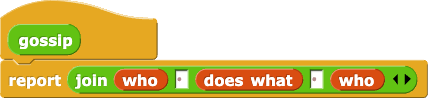
gossip: (report (join (who) ( ) (does what) ( ) (who)))
For reference:
who reporter block definition: report (item (random) of (list (Señora) (Ms. C) (my cat) (Hannah) (Jake))) does what reporter block definition: report (item (random) of (list (listened to) (loves) (ran away from) (helped) (is in a band with)))
Señora and Ms. C helped.
Señora ran away from my cat.
Hannah listened to Hannah.
Jake helped.
from Lab 2, Page 5
AAP-3.E
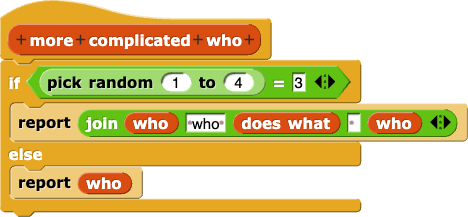
more complicated who {
    if (pick random (1) to (4)) = (3) {
        report (join (who) (', who') (does what) ( ) (who) (,))
    } else {
        report (who)
    }
} About how often will more complicated who pick the more complicated choice?
Half the time
A third of the time
A quarter of the time
Three quarters of the time
from Lab 2, Page 5
AAP-3.E
more complicated who {
    if (pick random (1) to (4)) = (3) {
        report (join (who) (', who') (does what) ( ) (who) (,))
    } else {
        report (who)
    }
} Here is the script inside more complicated who. What change to this script will make the more complicated phrase appear more often?
Change the 4 to 5.
Change the 4 to 3.
Change the 3 to 1.
Change the 3 to 5.
from Lab 2, Page 5
AAP-3.E
Click for a review of odd and even numbers.

An even number is an integer that is divisible by 2 (such as 2, 14, 0, -4, -6, -28, and -176).

In contrast, odd numbers are integers not divisible by 2 (such as 1, 3, 9, 17, -5, -33, and -221).

Which expression will return a random even number between 1 and 10?
RANDOM(2, 10)
2 * RANDOM(1, 5)
RANDOM(1, 10) / 2
RANDOM(1, 5)
from Lab 2, Page 5
AAP-3.E
Which expression will simulate the rolling of two dice?
RANDOM(1, 6) + RANDOM(1, 6)
2 * RANDOM(1, 6)
RANDOM(2, 12)
RANDOM(1, 12)

Lab 3: Modern Art with Polygons

from Lab 3, Page 1
AAP-2.A.1
Which of the following are examples of algorithms?
Snap! code that adds two numbers together.
Directions for how to get from one point to another on a map.
A sequence of different moves you do in a video game.
A recipe to bake a cake with precise measurements and instructions.
from Lab 3, Page 2
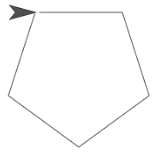
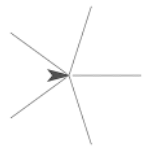
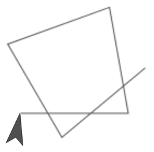
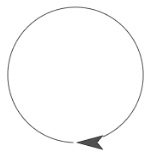
What shape would the following script draw?
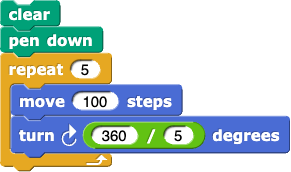
clear; pen down; repeat (5) {move (100) steps; turn right (360-divided-by-5) degrees}
pentagon
asterisk with five branches
figure with five sides, but not a closed polygon
circle
from Lab 3, Page 3
CRD-2.G.2
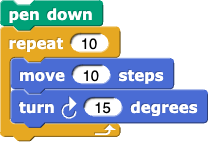
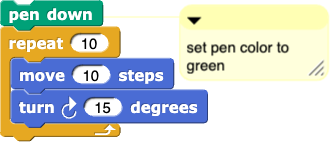
Consider these two scripts, and check all that are true.
pen down; repeat (10) {move (10) steps; turn right (15) degrees} pen down (with comment: set pen color to green); repeat (10) {move (10) steps; turn right (15) degrees}
Both scripts have the same behavior.
One script has a comment, but it doesn’t change how the program runs.
In one script, the pen color will be green.
The script with the comment will not run.
from Lab 3, Page 4
AAP-3.B.4
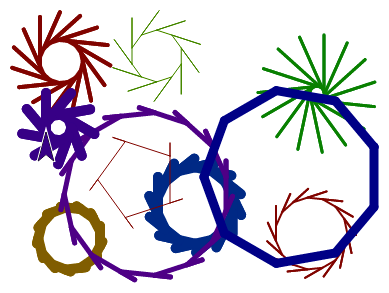
If you were trying to make the image below, what correctly describes the choice of whether or not to use a procedure to draw the pinwheels?
assortment of pinwheels
A procedure should not be used in this case because the pinwheels are too different from each other.
A procedure could improve the efficiency of drawing pinwheels, resulting in faster drawing of the image on the screen.
A procedure would allow for random placement of pinwheels, adding artistic variation to the image.
A procedure would facilitate code reuse, enabling easy replication of pinwheel designs with different input parameters.
from Lab 3, Page 5
AAP-3.B.5
Which statement best illustrates the importance of using parameters in programming procedures (such as number of branches in the pinwheel code)?
Parameters restrict the flexibility of procedures, making them applicable to only specific input values.
Parameters make procedures harder to understand for beginners and should be avoided whenever possible.
Parameters enable procedures to be generalized, allowing them to be reused with various input values (arguments).
Parameters can be omitted without affecting the functionality of a procedure.
from Lab 3, Page 6
AAP-2.J.1
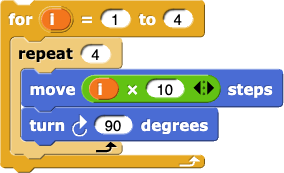
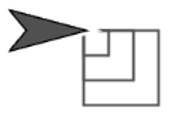
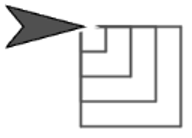
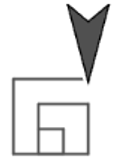
Given the program code below, what will the output be?
for (i)=(1) to (4) {repeat (4) {move ((i)*(20)) steps; turn right (90) degrees}}
three nested squares
four nested squares
three nested squares, growing in a spiral
three nested triangles

Lab 4: Protecting Your Privacy

from Lab 4, Page 1
IOC-2.A.1
What is a potential effect of having your PII (personally identifiable information) shared online?
It may limit the number of advertisements you see.
It can be used for identity theft, harassment, or fraud.
It increases the efficiency of your internet browsing.
It automatically updates your software.
from Lab 4, Page 2
IOC-2.A.5
By selling data to third parties without the consumer's consent, a company is doing which of the following?
Misusing customer data for company profit.
Using customer data to improve product quality.
Storing it securely in the third party’s database systems.
Collaborating with customers to enhance data protection.
from Lab 4, Page 2
IOC-2.A.8
Which of the following is an example of how PII and other information collected by a website can be used to benefit the user?
  1. Improving user experience.
  2. Restricting access to information based on geographical location.
  3. Providing personalized services.
i only
ii only
i and ii
i and iii
from Lab 4, Page 4
IOC-1.F.11
What is the primary reason why facial recognition technology is considered controversial?
Because it is less accurate than traditional identification methods.
Due to its potential for misuse in surveillance and privacy violations.
Because it requires high computational power.
It is only available to high-end devices.
from Lab 4, Page 4
IOC-2.A.3
What type of data can websites collect about their visitors without their knowledge?
Only the visitor's name and email address
Data related to the visitor's physical health
Only the visitor's credit card information
Information like browsing history, preferences, and login details

Lab 5: Follow the Leader

from Lab 5, Page 2
AAP-2.K.4
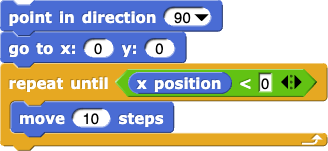
When the code below is executed, how many times will the sprite move 10 steps?
point in direction (90); go to x:(0) y:(0); repeat until ((x position)<(0)) {move (10) steps}
0 times
1 time
10 times
Forever
from Lab 5, Page 2
AAP-2.K.5
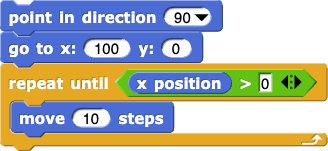
When the code below is executed, how many times does the sprite move 10 steps?
point in direction (90); go to x:(100) y:(0); repeat until ((x position)>(0)) {move (10) steps}
0 times
1 time
10 times
Forever